Author: Oswaldo Metzler

Ostomy Care; Cutting Flanges

People with ostomies may have difficulties while preparing pouching systems which are suitable for their needs. One of the biggest fears is making a mistake that may result in complications to the surrounding skin or stoma. On the other hand, some people may develop additional medical conditions that may make it hard to prepare the pouching systems; for instance, arthritis. Fortunately, there are various options that you can try.

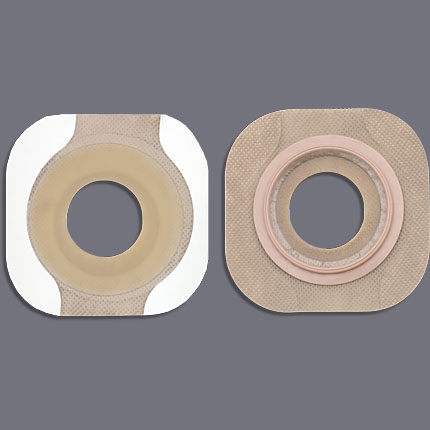
In case your stoma is fairly round, pre-cut pouching systems are suitable for you. The pre-cut systems are made by various companies and are available in the market. Thus, they eliminate the need to prepare the pouching systems at home. 

The sizes of the pre-cut pouching systems vary. When selecting a particular pre-cut system, it is prudent to consider the relative size of the stoma and the opening of the flange. Consequently, the flange’s opening should be about three to four millimeters larger compared to the stoma. The size adjustments ensure the systems do not cause trauma to the stoma. For instance, firm convex flanges are likely to cause trauma; hence, the need to carefully consider size adjustments.

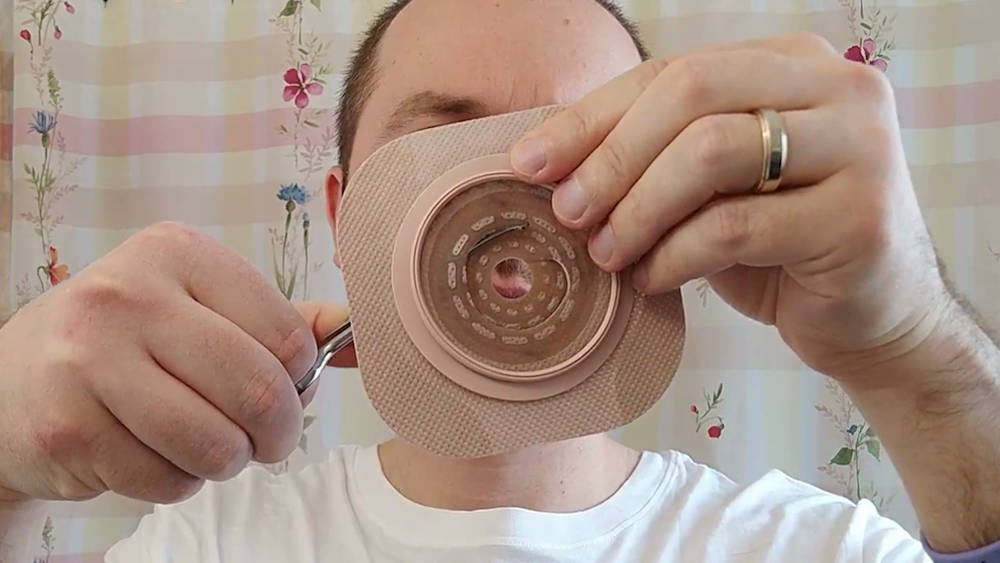
You can cut the flange’s opening using a pair of scissors. However, since this may be a concern in conditions like arthritis, a flange-cutter is a suitable substitute. A flange-cutter is a cutting tool that can be round or oval. When using the tool, the flanges should be placed on a hard surface during the cutting to avoid damaging the surfaces beneath.
In addition, technology has provided other options that can be employed in ostomy care. For instance, the barrier part of the flange may be left uncut. Pliable technology can be applied in forming the right size and shape of the flanges. Consequently, if you acquire such a flange, roll the inner edge to the optimum dimensions. On application of the flange, you unfold the edge until it touches the stroma; thus, cuffing around it. Interestingly, it will not cause injury to your trauma; hence, no need to worry about the contact point between the stoma and the product.

It is important to remember that the product of pliable technology is useful for people with protruding stomas. The protrusion stops the unraveling of the rolled edge; thus, making it cover the stoma. Additionally, it is a two-piece system; hence, some people may not prefer it.

Another option to take when you face difficulties while cutting your flange is visiting a medical supply store or pharmacy offering the cutting services. Some of the local suppliers and pharmacies offer good flange-cutting services at an affordable rate.
It is advisable to seek professional services than depending on friends or family. However, in case all the options are not feasible, you can seek the help of a family member or friend. Advisably, guide them on how to cut the flanges. Besides, if you are in a local support group, seek help from a volunteer who knows how to cut the flanges. There are many good options. It is your responsibility to decide on what is best for you.
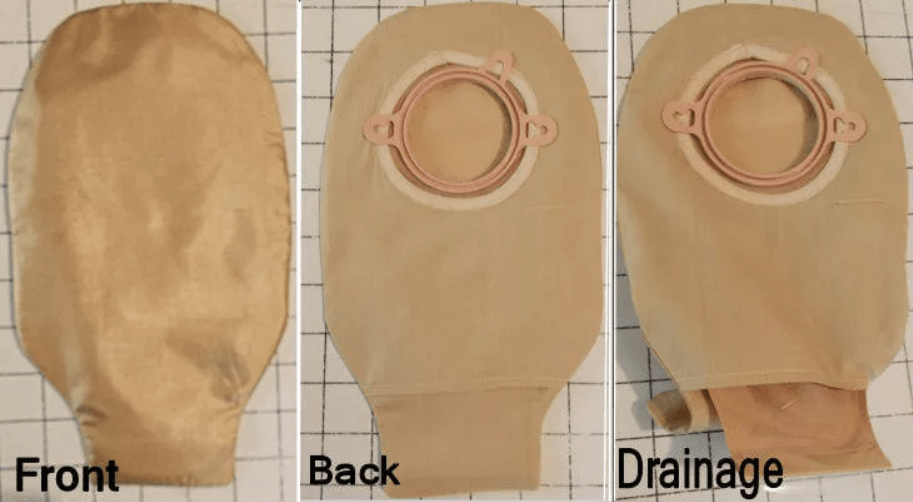
Tips To Make An Ostomy Bag Cover

The byproduct of wearing an ostomy bag is a set of concerns that may include skin irritation and problem concealing the ostomy appliance. You can address both these concerns by using a DIY ostomy bag cover. Preparing an ostomy cover is a simple project that requires a piece of soft fabric and intermediate sewing skills. The best thing about preparing a cover this way is that the cover will be right according to the shape and size of the variety of bags you use.

Items that you will need in this regard may include:

  • Marking tools
  • An ostomy bag that you will use for tracing
  • Tape for measuring
  • Pins
  • Sewing machine
  • Soft fabric
  • Paper for making patterns
  • Double-fold bias tape
  • Matching thread

Here is the step-by-step process to make an ostomy bag cover.

Create a pattern for the cover

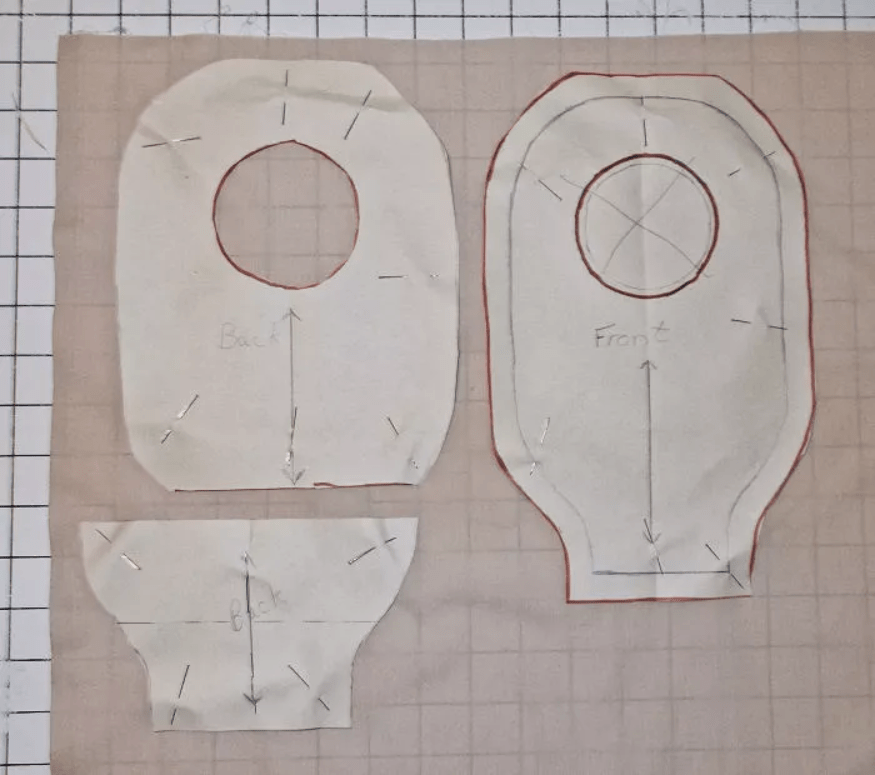
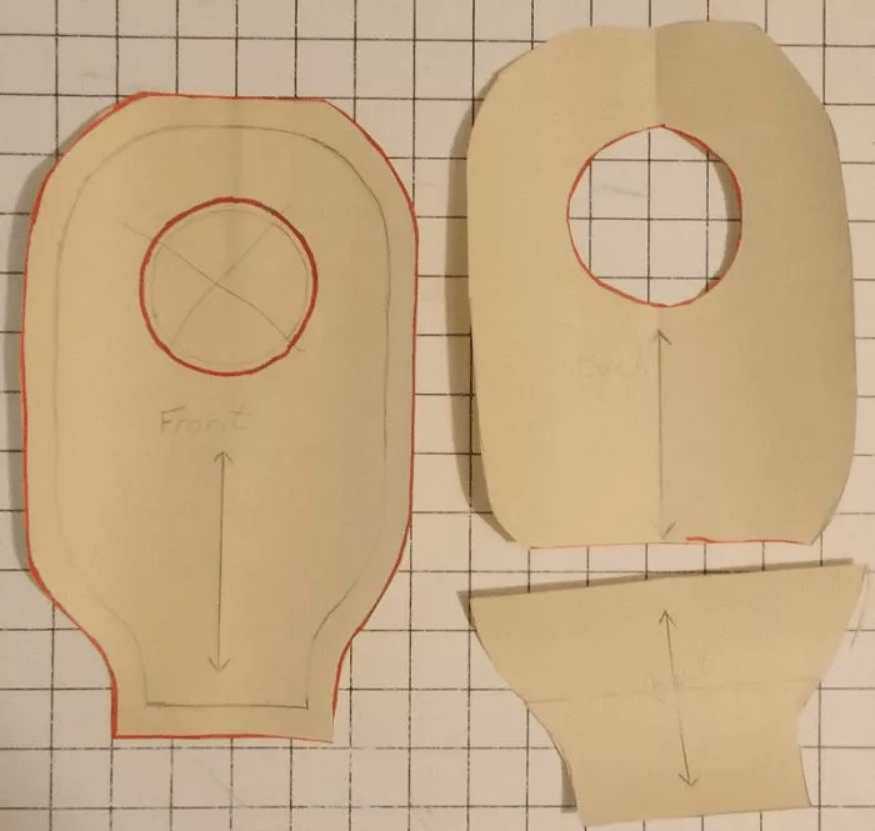
If you use a drainable ostomy bag, close it and place it flat on the paper. Use a marker to trace its edges. Trace the flange opening as well. Make sure that the traced edges of the flange opening are 1/8 inch larger than the actual size of the opening. Cut out the pattern of the front of the bag. Do not cut the flange opening.

Use the same size to create the back pattern of the bag. Carefully cut the pattern to create the flange opening. You may want to use the measuring tape to measure the distance between the sides and edges of the flange opening. Make sure that the overall size of the patterns is larger than the actual size of the ostomy bag.

Cut the pattern pieces

Spread out the fabric in a single layer. You may want to iron it out if it has too many wrinkles. Lay out the paper patterns on the fabric and staple them. It will make cutting the fabric easier.

Sew the flange opening

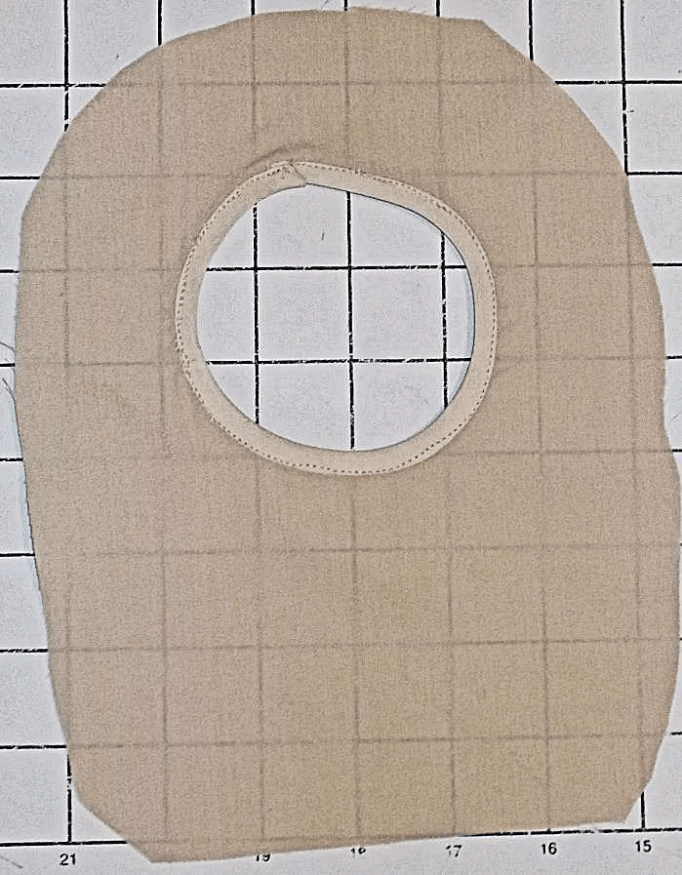
You can stabilize the opening of the flange by stay stitching near the edges. Use double-fold bias tape to enclose the flange opening. Fold the end where you want to start sewing. Keep folding the end right before the sewing. If you have trouble using a machine to sew the edges of the flange opening, you may want to hand-baste the bias tape.

Create the back section of the cover

Press 1/4-inch on the two back sections at their splitting line. Sew the turned edges to create a hemmed edge on the back sections.

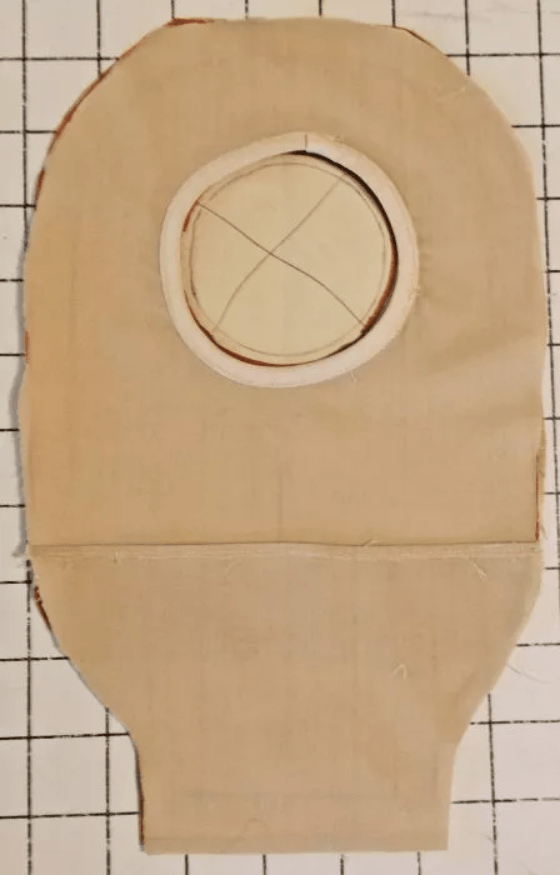
Lay the front section on a flat surface and then lay the larger back pieces over the front section. Make sure that the edges are aligned. Then, lay the small bottom back on the upper part to align the lower edges. Pin the edges to keep the entire arrangement in place.

Join the front and back sections

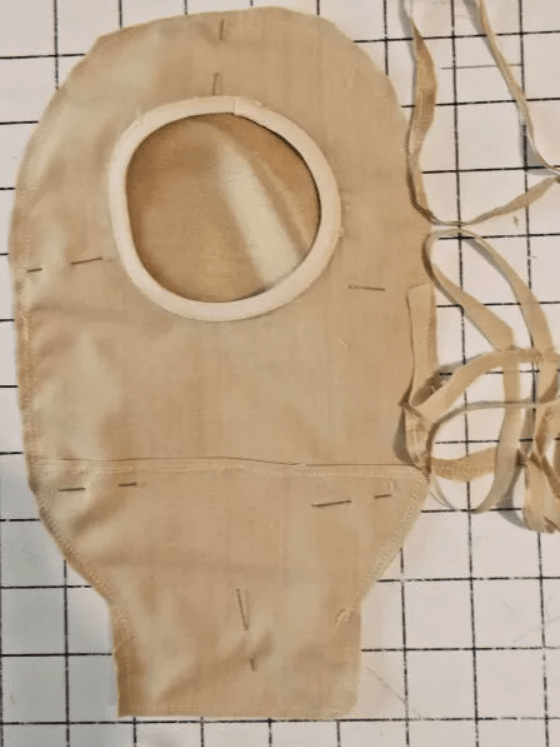
Lay the front and back sections over each other in such a way that their edges are aligned. Pin the layers and start sewing. Make sure that the internal space of the cover is 1/4-inch larger than the ostomy bag.

A Brief Note about Ostomy Paste

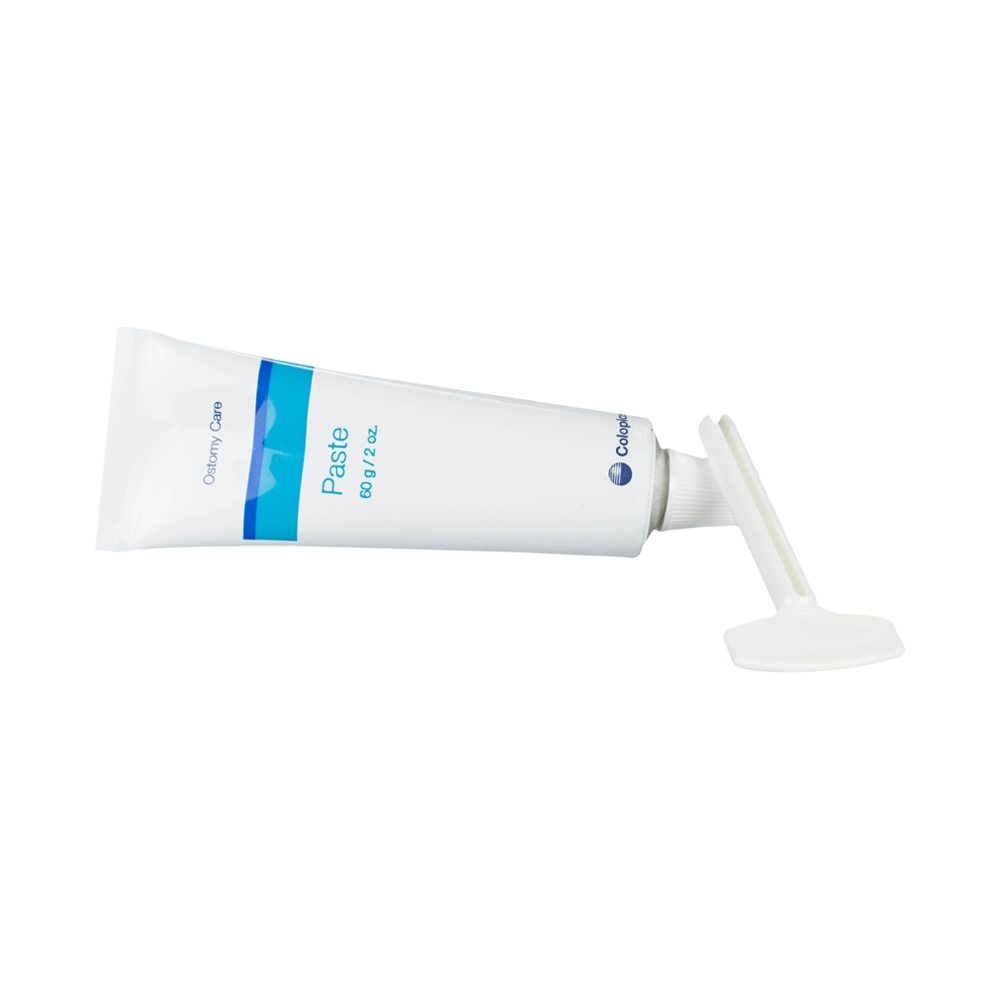
Although the name suggests it to be a paste, it is not a paste at all. It is more like a caulk rather than a glue or adhesive. The main purpose of this caulk like paste is to fill in uneven skin contours in order to develop a flatter surface for the better attachment of ostomy pouching system. The flatter skin remains completely flush against the barrier/flange; and this caulk/paste is the material that ensures this required flatness. Remember, the fissures or contours in the skin can lead to the dislodging of barrier/flange, resulting in the leakage of ostomy pouching system.

With the help of this paste, you can ensure longer wear time of the pouch and greater protection of your skin against irritation which is usually caused by stomal output and moisture.

Tips for using ostomy paste

  • First of all, you are going to have to clean the stoma to allow the paste to remain there for a longer period of time.
  • Avoid using soaps because they can leave residue which can affect proper adhesion.
  • You are going to have to dry the skin completely because ostomy products do not work with the wet skin.
  • You can place the ostomy paste on the barrier or directly on the skin.
  • You can use ostomy paste as an alternative to the barrier ring or seal.

Method of ostomy paste application

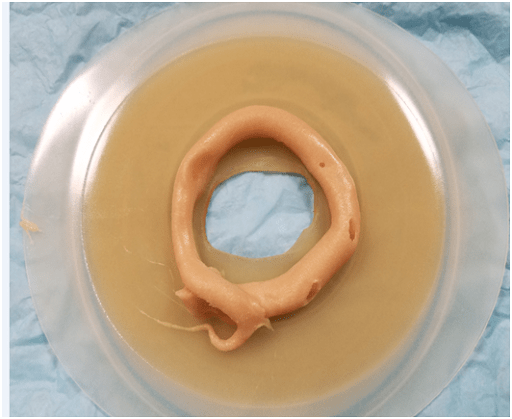
The paste is usually applied to fill the gap between wafer and skin. If you are doing the same, you are going to have to squeeze the tube to get the paste out. As the paste comes out, follow the small circle in the center of the wafer to make a ring of this paste. Using finger to smooth the paste out is completely safe for skin, so you can do it if you need. The paste needs to be applied to the side of wafer that has to go against your abdomen. After the application of this paste on the wafer, you will want to let it set up for a minute before applying this wafer to the stoma. Now you will need to hold the wafer against your abdomen in order to let the paste make a good seal. But one thing that is worth mentioning here is that this paste is not glue. It is just a filling that prevents leakage and, so, contributes in the longevity of your wafer as well as the pouching system.

Things You May Want To Know About Stoma Powder

The moisture around stoma can cause ostomy barrier/flange to lose adhesion, leading to the leakage of stoma output. Furthermore, this leakage can cause serious kind of irritation in the skin surrounding the stoma. One of the ways you can stop this moisture from leaking out and causing damage to the ostomy pouching system and your skin is to use the stoma powder.

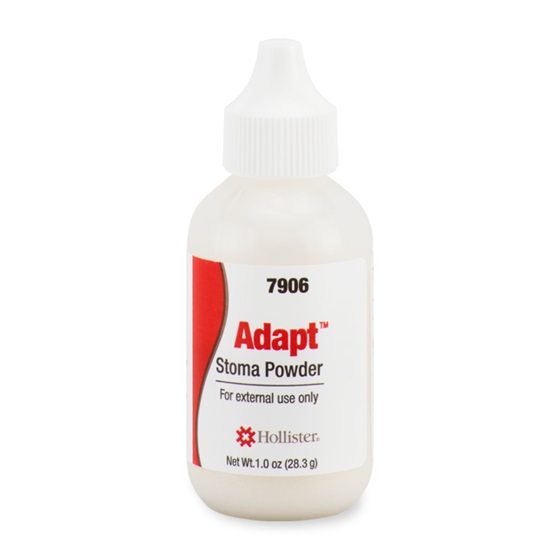
Stoma powder is not something like baby powder or body talc. So it is not going to be a good idea to use them interchangeably. This powder can be used with a colostomy, ileostomy, and/or urostomy. The main function of this powder is to absorb moisture to stop it from reaching the flange/barrier in order to let it adhere to the stoma in a better way. And by stopping the moisture from leaking out, it helps the skin around the stoma to heal. But remember, this powder is not a skin protectant. It doesn’t also prevent irritation. It just stops moisture from leaking out and dissolving the adhesives of the flange/barrier. The relief that you get from irritation by using this powder is due to the powder’s ability to absorb moisture from the skin, letting it heal properly.

Why does the skin around stoma get irritated?

The irritation in skin can occur due to coming in contact with the stomal output and/or moisture. Leakage can occur as a result of inappropriate fitting of the ostomy skin barrier. In certain cases, the stoma can get recessed. It can cause the stomal output to leak out instead of going into the pouch. You are going to need a convex ostomy system to manage the recessed or flush stoma. Removing the ostomy barrier too often can lead to the tearing of top skin layer of skin around the stoma; and it can also lead to irritation. You have to make sure that the skin around your stoma is as healthy as the skin elsewhere on your body. The ostomy pouch will not adhere properly if the skin is broken, raw, or weeping. If your skin remains moist and irritated, you can contact the medical professional for help.

Using the stoma powder

  • Clean the skin by washing it thoroughly; and dry it.
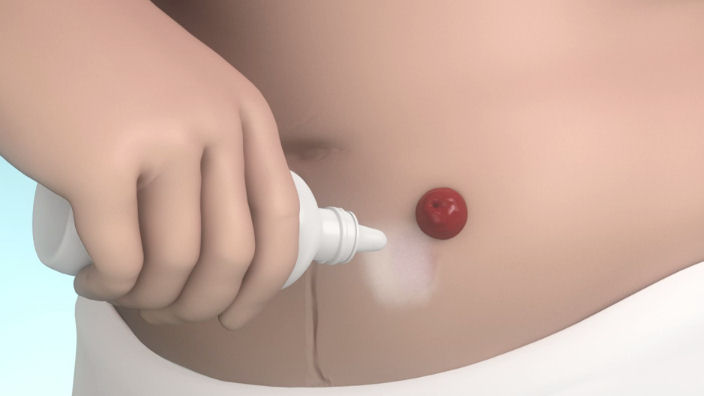
  • Apply stoma powder on the irritating part of the stoma skin.
  • Make sure that you are applying stoma powder only on the raw or moist part of the skin.
  • Use a soft tissue to brush away the excess powder. The powder applied on the moist part of the skin will stick.
  • Make sure that no stoma powder is left on the surrounding skin because it doesn’t help in preventing irritation, and it can also interfere with the proper adhesion of ostomy system.
  • You need to stop using stoma powder once the skin is healed.

Ulcerative Colitis Surgery 

Living with chronic disease including ulcerative colitis usually means multiple approaches to the treatment, such as medications, modifications of your diet, supplements, and surgery. While surgery can be stressful and cause worry in some people, it can alleviate the symptoms as well, so definitely talk to your team if you feel like this is a surgery that you or someone you love should get. There are some complications that can happen with ulcerative colitis. While medication can normally manage this, if you have different complications, you will want to definitely seek out surgery. We’ll go over what these are here. 

Sudden and Severe Ulcerative colitis 

This is one of the main reasons for emergency colitis surgery, and usually, it can be hard to control this. This is usually when there is bleeding that occurs deep inside the ulcerations in the colon. There also may be chances that toxic megacolon develops too, which is a life-threatening condition that’s caused by inflammation that’s severe. This leads to a big colon, and this can actually cause fever, rapid heart, dehydration ad constipation. You definitely want immediate treatment in this case. 

Colon Perforation 

This is another cause for ulcerative colitis, and usually, if there is chronic inflammation due to this in your colon wall, a hole will develop, also called a perforation. Once this is perforated, the intestinal contents can come out, and cause peritonitis that’s actually life threatening and does require medical treatment. 

The Procedures 

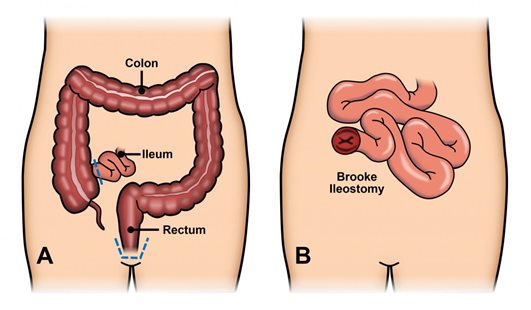
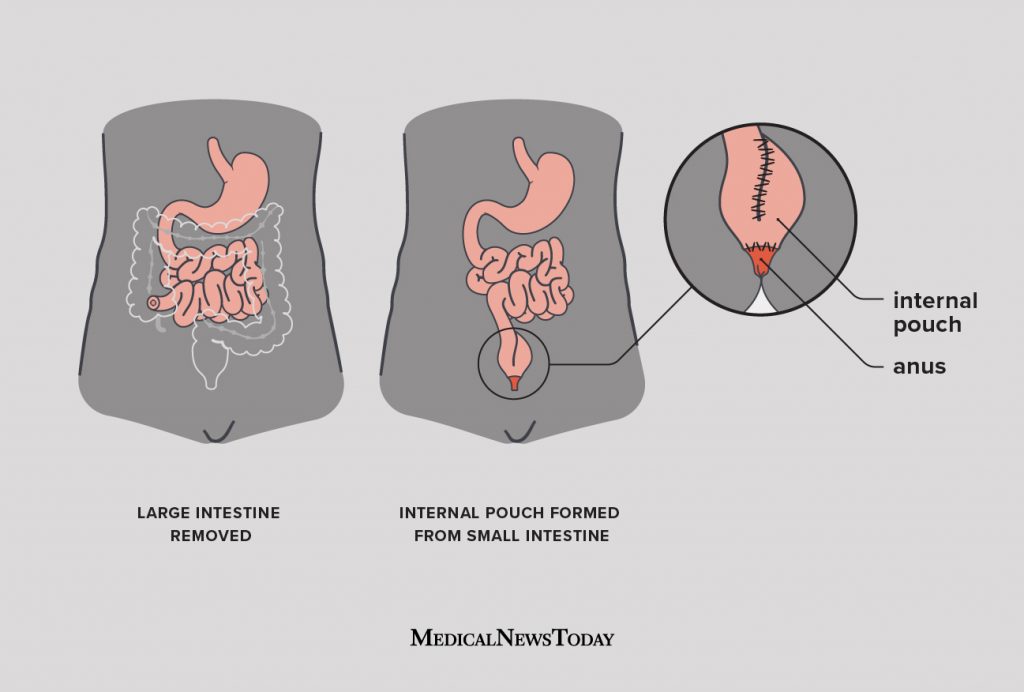
Usually, the standard way to treat this is a proctocolectomy, which is the removal of the colon along with the rectum. Sometimes this may be done with an ileal-anal pouch, which is also called a j pouch, and this does eliminate the need for a permanent ostomy in the ileum. There is also the removal of everything, and an ostomy is then done. It can be scary, but you should talk to your doctor about both of these before you choose which is right for you. 

J pouch surgery 

Some cases may be treated with what’s called laparoscopic surgery, which is where they use instruments in the body, small cameras that show the inside to see what’s going on. This can help determine whether or not you need it, and the best way to go abut this. The procedure though is normally done in multiple stages, up to three. Sometimes one is done, but usually not since that does put you at risk for infection. They usually start with the temporary ileostomy, to give the pouch a chance to heal, so you will need to wear the ostomy pouch. Usually, they may do the three stage procedure for those who aren’t in good health, have steroids, or they need emergency surgery for bleeding or if they have a toxic megacolon. With this surgery, you may experience a lot of bowel movements, and the pouch does grow in size, with the muscles strengthening, this does result in the stools being bigger, and not as frequent too. 

Total Proctocolectomy 

This is another option, and it involves removing the entire colon, anus, and the rectum, creating an ileostomy in order to get the stool out of there. This is similar to the J pouch surgery, but this is permanent. The stoma of course is small, but you will have this permanently, and you will need to empty it quite often. Luckily though, the pouch is kind of discreet and most don’t see it unless you point this out. With these surgeries, they do take some time, and usually, the adjustment is a bit longer. You also may be on a liquid diet for a bit longer. 

My Ostomy Pouch is Smelly—what do I do? 

Do you struggle with ostomy pouch smells? You’re not alone. This is an issue for many people. You don’t want to smell bodily waste, and you definitely don’t want others to notice this either. Luckily though, there isn’t much for you to do to make sure that you have an ostomy pouch that doesn’t smell, and there are a few tips to ensure that your pouch isn’t too stinky or anything either. 

Check for Leaks 

One helpful way to get started is to check for leaks to your ostomy pouch. How do you fix it if it’s there? First, if you have a skin barrier to apply, ensure that the peristomal skin is shaven, cleaned, and dry. Don’t use lotions or soaps around this, since it can reduce the adhesion and also interfere with your skin too. If you feel that the skin is raw or weepy, you might want to try a different type of adhesive or other product since it might be irritated by the product itself. You also want to make sure that that you don’t have issues stopping you from using the ostomy pouching system, and if needed, consider adding an adhesive powder towards the barrier to help with moisture reduction, and to improve the health of your skin when you use the stoma bag as well. 

Deodorize Safely 

When dealing with ostomy pouches that smell, you might try to use cologne or perfume or try to use oils inside of there. But these fixes are quick fixes, and it won’t fully deodorize the urine and stool there but just mask the ostomy scents as well, and it may possibly damage the skin, the stoma itself, and affect your pouching system. You should instead use deodorizing products that are safe for ostomies. For example, there are pouch drops and tablets which you can use on this, and they control the odors in there. There is also a charcoal filter that absorbs the order that allows the air to escape, preventing the pouch from ballooning up, and there are many different products that are actually covered by different insurance plans, so you’ll be able to get the help that you need, handling it effectively. 

Empty the Pouch regularly 

Even the best supplies will definitely help to control, but you also need to empty and change the pouch the moment it starts to leak out, and the smalls become noticeable. Regularly changing this, while also emptying out your ostomy pouch will reduce the output that’s sitting in there. Plus, once you empty the pouch, it also reduces the pressure that’s there on your stoma. An ostomy bag that becomes too heavy will have odor, but also leakage too in most cases, and you can also create a schedule to empty and change the pouches for yourself. 

Your diet Maters 

Finally, you will want to look at the diet that you have and also evaluate it to help you figure out what’s crating more gas, odor, or more output of urine or stool. Alcohol, beans, eggs, fish, sugary elements, foods that are fried, asparagus, cheese, and even coffee ca actually increase the smells from your ostomy bag for a variety of reasons. If you want to, you can start to work to drink some cranberry juice, and also eat more veggies and fruits that help with this.  Try to have more dairy and take some probiotics. And finally, make sure that you’re hydrated, since this can help to reduce odors and also control the output from your stoma as well. 

How To Stop Smelling Bad With An Ostomy 

Nobody likes to smell bad – especially me. I actually have a huge aversion to the smell of body odor. I seriously hate the way it smells so much and it gives me a headache. The other day when I was at the gym, there was this dude who smelled so bad that it literally stunk up the entire place. Now I completely understand a little bit of body odor that goes on at the gym; however, this was something different altogether. This body odor was super strong and seeped into every crack and crevice of that room.

There was no way to escape from it. How do you not notice when you smell the bad? I seriously do not understand it. Anyways, all that to say – smelling bad is the worst. People with ostomies undoubtedly experience smelling bad all the time, since they literally have their poop and pee sitting in a bag that is attached to their body. Well, there are actually certain products made for these people that involve deodorizing your ostomy pouch to keep from smelling so bad. The great thing about all the medical advancements we have made with the evolution of our society is that things like bad odors can be a thing of the past (as long as we are willing to use various products of course).

One thing that I hate about wearing my ostomy pouch around in public is that I am always worried I am going to start smelling like my output. Smelling bad is not just for when you are hiding away in the bathroom trying to change your ostomy pouch. Sometimes you can just be walking around through the mall and then, suddenly, you get a nasty whiff of your disgusting ostomy pouch. Is there a way around this problem? Of course there is! By simply using deodorizing products that are made for ostomy pouches, you can actually avoid smelling bad most of the time. Granted, you are still going to have to deal with other smells that may come out of your body (like your bad body odor or your bad breath), but you can at least be somewhat certain that not everybody around you in a 20 mile radius is going to be smelling your nasty ostomy pouch. Another thing that you really need to keep in mind is that you cannot just use any sort of scent masking or deodorizing product in order to cover the awful stench of your ostomy pouch. You have to specifically use products that were made specially for ostomy pouches; otherwise, you run the risk of hurting yourself, including your stoma, or damaging your ostomy pouch system.

All in all, I highly recommend using some sort of deodorizing product for your ostomy pouch. If you are not sure where to buy these products, you can most likely find them on different websites online. There are lots of online websites that sell ostomy pouch deodorizers for relatively cheap, so make sure that you head on over to those websites and order yourself some so that you can stop smelling bad all of the time. If you’re lucky, you can even find products that your insurance will cover as well. I hope that this article was helpful. I really hated writing it. 

Living with Ileostomies 

While it can be hard to adjust for your ileostomy at first, it can actually allow you to have a life that’s full and active.A lot will say that their life quality improves after they’ve had the surgery due to the fact that they’re not dealing with the discomfort as much. But if you find it hard to deal with, there are support groups that help with this, but here is some information on what you should do after an ileostomy. 

Equipment 

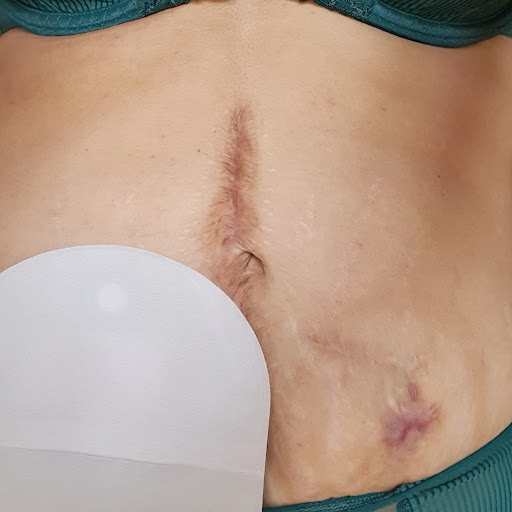
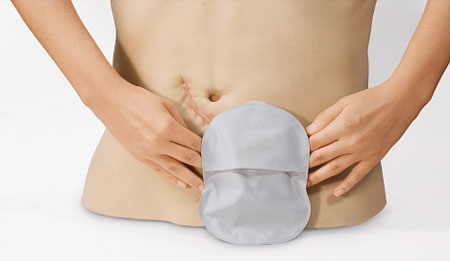
Before you go into an ileostomy surgery, your nurse will help, and they’ll go over how in the world you function with a stoma. First, you’ll have stoma bags, which is where the waste goes, and usually this either has a watery consistency, or similar to porridge for an ileostomy

There’s a range of bags, but the nurse can help. The bags are made from hypoallergenic ingredients and offer filters that ensure that bad smells don’t leave the bag. They also are drained through a bottom opening, so you don’t have to worry about it bulging, and it can be put under the clothes. Usually, you need to replace and get rid of the bags every 1-2 days on average. It does take a little bit of time to get used to, but this bag can definitely help in a lot of ways. 

Other Products 

You do have other products minus just the bag, and they include belts to support, deodorizers to help freshen up the bag itself, skin wipes for the peristomal skin, adhesive remover sprays to get rid of adhesive. Adhesive to help get the bag to stick on, and stoma guards to prevent leakages Not all of these are used for every single person with an ileostomy, and you should discuss this with your doctor before making a decision. 

How to Order Equipment 

You can get products based on insurance, or even some prescriptions which are free. Typically, you get some bags when you leave the hospital but there may be a prescription that they give you. You should always inform the GP of any important information for them to take note and use in the records. 

You can ten take that prescription and then send it in, and you should get supplies to be delivered automatically. You don’t need to get a ton of supplies, but instead order then when you need it, and make sure to do it before you run out of supplies. 

Care for your Stoma 

The stoma output does cause irritation, so you should always make sure to keep your skin clean with a mild soap and some water. It is common for blood to show up when you clean your stoma, and that of course is normal due to the blood vessels that are there, since they do bleed easily, but it isn’t really long bleeding, so it will stop. 

If the skin is itching or there is a burning sensation, you will have to change the appliance and bag, and you can contact you ET if you notice that it isn’t going away. If you notice that there is inflammation of the skin, you definitely will want to tell the doctor or the nurse to help get you a powder, spray, or cream to help treat the problem. 

As for a diet, you should try to make sure to follow a diet that isn’t too fibrous, since that does make the stools thicker and it can cause an obstruction. It does depend on what you can and can’t eat, so experiment, and take care and be mindful of this.