Living with chronic disease including ulcerative colitis usually means multiple approaches to the treatment, such as medications, modifications of your diet, supplements, and surgery. While surgery can be stressful and cause worry in some people, it can alleviate the symptoms as well, so definitely talk to your team if you feel like this is a surgery that you or someone you love should get. There are some complications that can happen with ulcerative colitis. While medication can normally manage this, if you have different complications, you will want to definitely seek out surgery. We’ll go over what these are here.
Sudden and Severe Ulcerative colitis
This is one of the main reasons for emergency colitis surgery, and usually, it can be hard to control this. This is usually when there is bleeding that occurs deep inside the ulcerations in the colon. There also may be chances that toxic megacolon develops too, which is a life-threatening condition that’s caused by inflammation that’s severe. This leads to a big colon, and this can actually cause fever, rapid heart, dehydration ad constipation. You definitely want immediate treatment in this case.
Colon Perforation
This is another cause for ulcerative colitis, and usually, if there is chronic inflammation due to this in your colon wall, a hole will develop, also called a perforation. Once this is perforated, the intestinal contents can come out, and cause peritonitis that’s actually life threatening and does require medical treatment.
The Procedures
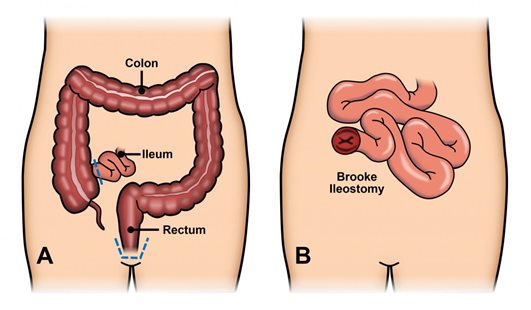
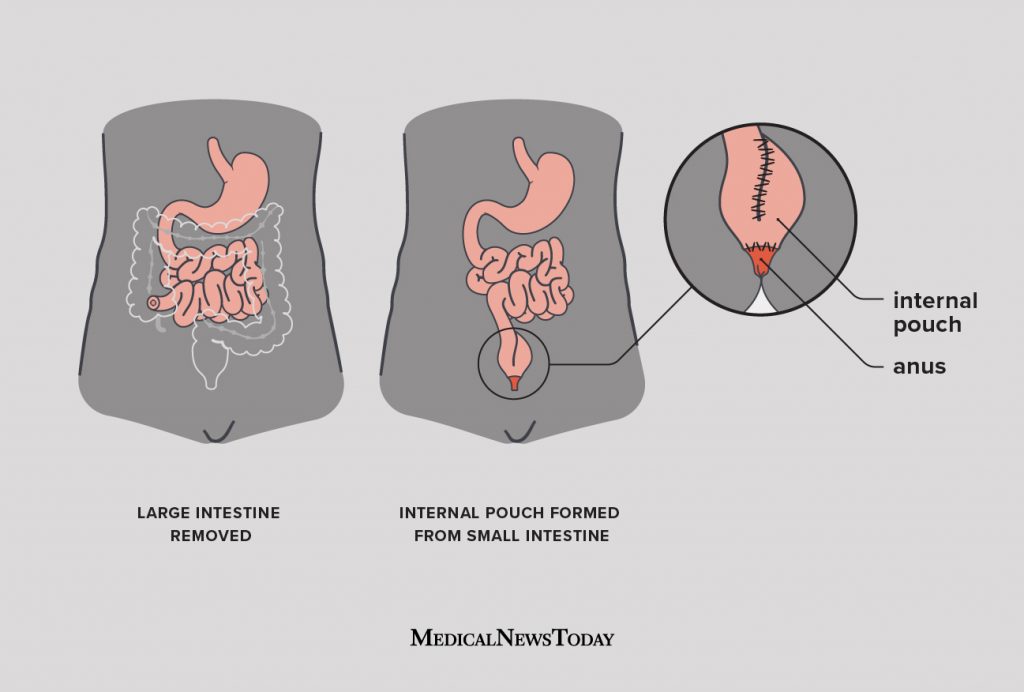
Usually, the standard way to treat this is a proctocolectomy, which is the removal of the colon along with the rectum. Sometimes this may be done with an ileal-anal pouch, which is also called a j pouch, and this does eliminate the need for a permanent ostomy in the ileum. There is also the removal of everything, and an ostomy is then done. It can be scary, but you should talk to your doctor about both of these before you choose which is right for you.
J pouch surgery
Some cases may be treated with what’s called laparoscopic surgery, which is where they use instruments in the body, small cameras that show the inside to see what’s going on. This can help determine whether or not you need it, and the best way to go abut this. The procedure though is normally done in multiple stages, up to three. Sometimes one is done, but usually not since that does put you at risk for infection. They usually start with the temporary ileostomy, to give the pouch a chance to heal, so you will need to wear the ostomy pouch. Usually, they may do the three stage procedure for those who aren’t in good health, have steroids, or they need emergency surgery for bleeding or if they have a toxic megacolon. With this surgery, you may experience a lot of bowel movements, and the pouch does grow in size, with the muscles strengthening, this does result in the stools being bigger, and not as frequent too.
Total Proctocolectomy
This is another option, and it involves removing the entire colon, anus, and the rectum, creating an ileostomy in order to get the stool out of there. This is similar to the J pouch surgery, but this is permanent. The stoma of course is small, but you will have this permanently, and you will need to empty it quite often. Luckily though, the pouch is kind of discreet and most don’t see it unless you point this out. With these surgeries, they do take some time, and usually, the adjustment is a bit longer. You also may be on a liquid diet for a bit longer.
 Ostomy Help